Friday, April 07, 2006

Emulating Gene Bob and Geoff Arnold: Go to Wikipedia and look up your birth day (excluding the year). List three neat facts/events, two births and one death in your journal, including the year.

Events:
Births:
Death:

Update (04/10/2006): I learned today that the above little fun tidbit is what is referred to in blog terminology as a 'meme'. My first meme.
Definition: In the world of blogs and bloggers, a meme is an idea, question, statement or project that is posted in one blog and answered to in many other blogs. Memes are used to propagate ideas in the blogosphere. Some blogs or web sites post memes on a daily, weekly, fortnightly or monthly basis. (Referece: about.com)

Technorati:

Wednesday, April 05, 2006

How I work

Fortune magazine has great series, called How I work, on how several succesful business people work: the tools, the schedules, the habits. Interesting how Hank Paulson, Chairman and CEO of Goldman Sachs, has never even used email. Or how Bill Gates uses Outlook across two monitors (and still believes Outlook is great - what's up with that?). Google-geek Marissa Mayer, like some of my colleagues, wouldn't trade Pine (text based, courier font) for any other email tool. I bet ya, she authors her documents in vi.

My work environment
My preferred system is my personal Apple Powerbook laptop. However, since my work (files) live on 'the network', I use a variety of systems to do my work. All I need is power and a network. Both my work email and calendar are on Edge servers. This means they can be accessed over a secure (SSL) link, from anywhere and any machine. Normally one is required to log in (over VPN) into the private corporate network. With our Edge mail and calendar servers, I no longer need to log in. This allows for a great level of flexibility. My office is in Menlo Park. My office desktop is a Sun Ultra 20 Opteron based desktop running Solaris 10. At least 3 days a week, I work from other locations within the company using a SunRay. SunRay's a nitfy thin client. Using a JavaBadge, my work environment (my files, my graphical user interface, my open documents, etc.) follow me around throughout the Bay Area: all I have to do is pop in my JavaBadge into a SunRay, and voila, there is my screen. At home, I use my Apple Powerbook, or a company Toshiba M2 laptop, running Fedora 3.

The Tools
I read email using Mail.app (MacOS X) or Thunderbird (Solaris 10, Linux). Both are configured with many filters, which put my emails in the right buckets, priorities and label them accordingly. On average I get about 150 emails per day.

My personal email is shielded into a Gmail account. I access my gmail via both the brower interface (because it has chat easily integrated), as well as POP to Mail.app.

I use both Safari and Firefox, and opt for ad-blocking proxies.

I keep up to date on technology news, news in the world, friend's blogs via RSS. I use Ranchero's NetNewsWire (MacOS X), Sage and Google Reader as my RSS readers. Recently, I started to use Google Reader a lot more, due to the fact that labeled feeds can be spliced and automatically included in my blog (the right side bar - Interesting bits I read).

Chat: AIM/iChat (waffletchnlgy), Google Talk
SMS: my calendar at work reminds me via SMS about upcoming appointments. I used to synchronize my cell phone with iCal (MacOS X), but due to an incompatibility, it was inefficient to synchronize both personal, work and mobile calendars.

I live on the network, love small and efficient tools. I use quiet a lot of Twiki throughout the day for status updates, product tracking, documentation etc. Oh, and I do carry around a notebook. All work gets divided weekly among five categories: Urgent, Important, Other, Personal and One-on-One. It helps prioritizing all the things to be done.

Where I work?
My 'official' office is in Menlo Park. I work in the Sunnyvale campus (once a week), the Santa Clara campus (two or three times a week) and from home. I get around via both my car, the company shuttle, sometimes the train, and in summer on the bicycle. Here are a few pictures from the Santa Clara campus I work out of regularly.


Saturday, April 01, 2006

Hasta la Vista!

I consider myself a computer tools junkie. I detest inefficient tools, broken processes or complicated steps with just too many clicks. I am always on the look out to try a new and more efficient method or tool and consider myself very much up to speed on the multiple useful (and no so useful) tools from Apple, Yahoo, Google, 37 signals and similar companies. An exception to this must be the $200+ mobile devices, which I consider too expensive for their functionality. I have no idea about Treo, Palm nor BlackBerry.

Since efficient and interoperable tools and Microsoft do not go together very well in one sentence, I hadn't paid much attentention to Microsoft Vista and Office 2007. Yes, I knew they were delayed, but that is hardly news from Redmond. In Barron's this week, I read an article about the financial impact of both products on Microsoft, as well as a summary of the new features. Let's run down the new features of Microsoft Vista 2007: (ha!)
  1. Security: Windows moves from 'the user is the administrator' to 'you need a password to be administrator'. This is touted as an example of Microsoft being serious about security. Unix - 1969. More modern and more secure operating systems have already moved away from the all-none user security status. For example, Solaris 10 introduced two years ago Process Rights Management (aka Privileges), a feature it imported from Trusted Solaris, a military grade version of the operating system. There is no 'god' in the system. And users and programs need the correct privilege to execute an operation.
  2. Vista embeds search. MacOS X Spotlight 2005. Google Desktop Search.
  3. Vista introduces a sidebar with widgets. MacOS X Dashboard 2005. Konfabulator, now part of Yahoo Widgets.
  4. Microsoft Vista introduces parental controls, a feature AOL and MacOS X provide for several years.
  5. Microsoft media will be able to handle high-definition video. Apple Quicktime 7 2005.
  6. Internet explorer introduces tabbed browsing. No kidding.
  7. Outlook will include an RSS reader. Thunderbird, MacOS X Safari 2005.
Balmer summed it up best:
"But what have we had in terms of innovation over the last few years? Frankly, as an industry, not all that much."
Wow, I rest my case.

Tuesday, March 28, 2006

Software as a service: it's about the data platform!

Current Software as a Service (Saas) enablers are successful because they provide the developer interfaces around the data they make available. These interfaces provide developers (1) ways to access, modify and add to the data in a secure way, but also (2) ways to present their application in a common user interface. It is the Ebay/Google/Salesforce.com killer application which brings in the data and which enables those vendors an additional revenue stream by allowing other services to build upon its data.

When examining the three big Saas players, Ebay, Google and Salesforce.com, integral to their platform is the data platform and to some extend the unified user interface. Although offering their own application as software as a service was by original design, neither company started out as 'Let's be the Saas platform for other applications'. All three started out building an infrastructure around a single application and a key type of data: Ebay, the garage-sale data; Google with a catalog of the internet and Salesforce.com around CRM data.

Salesforce.com and AppExchange (http://www.salesforce.com - http://www.appexchange.com)
Customers use Salesforce.com for its CRM application. The data is securely stored in Salesforce.com datacenter. The database schemas and type of data are available to developers. This allows them to create helper applications to enhance the CRM application of Salesforce.com. To date, through AppExchange (the developer platform, formerly called Sforce), over 70 applications have been created and are listed on the AppExchange application directory. What makes this platform attractive to other developers is that the applications act upon the same data present in the (CRM) database. In addition, when a customer purchases a third party application, it is automatically integrated into the customer's salesforce.com portal. This provides for a great user experience. It also allows for even the smallest ISV to showcase their product as part of the big CRM application.

In December 2005, Salesforce.com launched their developer test ground, the Saleforce.com sandbox. Step one when using the sandbox, replicate some of your CRM data to work upon. The sandbox gives you an exact copy of your Salesforce deployment – including all your customizations and data – with a single click.

Google (http://www.google.com)
Google's mission is to organize the world's information and make it universally accessible and useful. With Google Base, Google goes one step further: Google will host your data. Google Base is a place where you can easily submit all types of online and offline content which Google will host and make searchable online. You can describe any item you post with attributes, which will help people find it when they search Google Base. In fact, based on the relevance of the items, they may also be included in the main Google search index and other Google products like Froogle and Google Local. Other ways to submit information to Google include Google Video, Google Print, Google Sitemaps, but also Gmail and Blogger. Google is hosting your data using the data platform which has been serving their crawlers and search engine for several years. Google is slicing and cataloging your data using those same crawlers. With Google Analytics, Google is offering website statistics to the end user and eventually the Saas developer. And then there is the rumored Google GDrive (referred to in slides at the Google Analyst Day) promise infinite storage.
With infinite storage, we can house all user files, including: emails, web history, pictures, bookmarks, etc and make it accessible from anywhere (any device, any platform, etc). We already have efforts in this direction in terms of GDrive, GDS, Lighthouse, but all of them face bandwidth and storage constraints today. For example: Firefox team is working on server side stored state but they want to store only URLs rather than complete web pages for storage reasons. This theme will help us make the client less important (thin client, thick server model) which suits our strength vis-a-vis Microsoft and is also of great value to the user. As we move toward the "Store 100%" reality, the online copy of your data will become your Golden Copy and your local-machine copy serves more like a cache. An important implication of this theme is that we can make your online copy more secure than it would be on your own machine. Another important implication of this theme is that storing 100% of a user's data makes each piece of data more valuable because it can be access across applications. For example: a user's Orkut profile has more value when it's accessible from Gmail (as addressbook), Lighthouse ...
That's exactly it: each piece of data is more valuable as it can be used across various Google applications, as well as third party applications. The access to catalogued data is a very important factor developers will choose the Google APIs and for Google to partner with for Saas.

Similar arguments can be made for Ebay with over 100 applications it is Ebay solution directory already, using the same Ebay storefront user interface and accessing the same Ebay data.

Or Amazon Simple Storage Service (S3): tempting you to host your data with Amazon.

Or Windows Live (project Fremont).


The keys to the Saas kingdom will be in the hands of those who host the most data and have the scalable and secure data platform to support it.

How to get around in Silicon Valley

  1. Back to the future style - with a skate board or via rollerblades. You'll look very 'green' and counter culture. But really, to and from the bus stop is all you can do.
  2. Bicycle messenger style - You'll look like a dare devil in San Francisco or like a geek-superman (as opposed to the geek-fatso). The final wagon of Caltrain is reserved for you. Carry a small laptop in your Timbuktu messenger bag and you'll fit right in. If you are more the romantic type, check out the Bay trails for long rides along the bay. Bicycle lanes are rare, but several bicycle bridges will help you get across highway 101 or the caltrain train tracks.
  3. The Tortoise - Although the green tortoise is known among the more adventurous traveler visiting California, the lesser known brother is the local bus system (i.e. VTA). A bus ride from San Jose to Palo Alto will take you a few hours, as the bus stops literally every 500 meters. Come on Bay Area, it won't hurt to walk a block or two. Use the tortoise if you want to hang out with the transients and homeless on the 22 or 66. Line 66 will take you past the homeless shelter. It will never be boring and you'll hear some exciting stories and political view points.
  4. On not your grandpa's train - the Caltrain will get you from San Jose to San Francisco in under an hour via the baby bullet train. Caltrain offers also special service for the games of the San Francisco Giant or the San Jose Sharks. The ACE train (the Altamont commuter express) even has wireless access to get online and read your email. For the collector of trainpasses, try also VTA's lightrail (aka the Tortoise on rails) or BART (Bay Area Rapid Transport). I watched documentaries about BART when I was still in Belgium about how wonderful it was. But BART must be the only rail system which has its own hourly traffic report on delays and failures in the system.
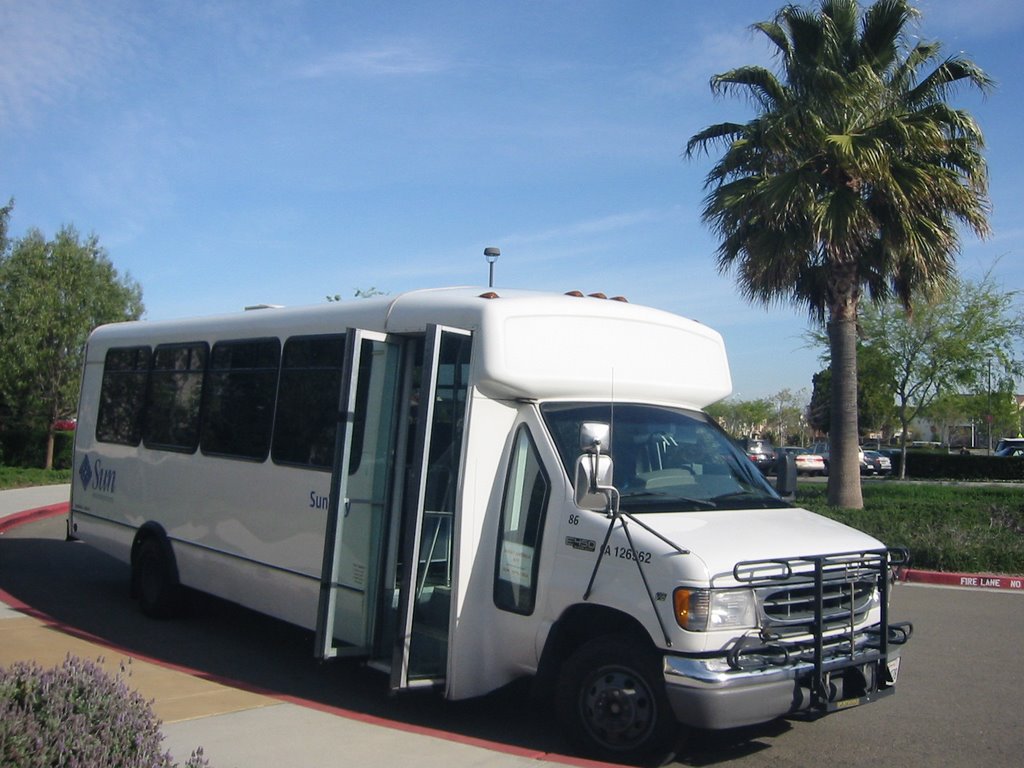
  5. Hail to the shuttle army - Caltrain, BART, Lightrail, bus, are just a subset of all the public transportation offerings in silicon valley. And then, planner forgot to hook them up properly. So, when you arrive in San Jose Diridon caltrain station, for years you needed to walk a few miles to get to the lightrail. Or when you arrive in San Francisco by train, start walking 10 block to get to a BART station. So, private or company sponsored shuttle services popped up all over the place. I currently use a few days a week the company shuttle from the Santa Clara campus to my office in Menlo Park. The picture below will soon become a relic, as starting next week, the Sun shuttle service will change from Xerox (yes, the copier company also runs shuttles) to New Century (no affliation with the film company, as far as know). Note you can even put your cycicle on the rack in the front of the shuttle.

    Our shuttle service is bare minimum. Other shuttles are luxury coaches with nice seats, wonderful shocks and even wireless internet access.

Over the years, I have used (and continue to use) a combination of various ways to get around. In winter, I use primarely the company shuttle and occasionally catch a carpool ride with a friend. In summer, California weather is perfect for hopping on my bicycle + {caltrain,shuttle}. Many companies have showers in the office, which my colleagues are thankful for.

Knowing all the different shuttles schedules or merely its availability was difficult. Lining up the schedules of two services wasn't that easy. Luckily, 511.org solved the problem. It is a great place to find everything you want to know about getting around in silicon valley. From carpool, to bicycle paths, to the list of the shuttle schedules.

Google Finance charts are off

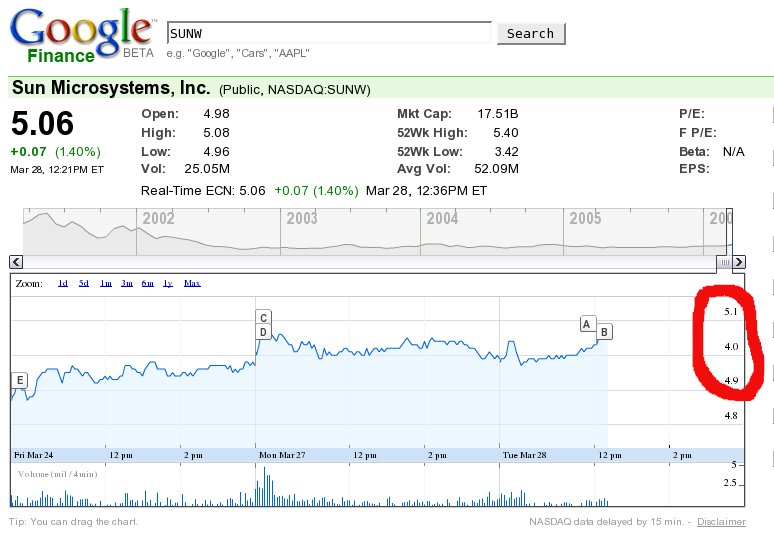
Google finance is off the chart. It has a number of great features currently lacking in Yahoo finance. However, Yahoo finance does seem more complete. I currently follow SUNW closely. The shares of Sun Microsystems finally made it across the $5 mark. And that's when something odd struck me with the charts of Google Finance. The Y-axis of Google Finance is wrong. It starts 4.8 - 4.9 - 4.0 - 5.1. Odd. I've been thinking how algorithmically this could happen, but haven't come up with a program which accidentally could make such an error. Even worse, I haven't seen it with any other stock symbol yet. In either case, I've reported it to Google Finance.


3/29/2006: UPDATE: It's fixed now.

Technorati:

Saturday, February 25, 2006

Blue Vinyl


Last night, I watched Blue Vinyl, an investigative documentary in the style of Michael Moore about PVC (aka polyvinyl chloride, aka vinyl). Is vinyl harmful? Is the fabrication and disposal of vinyl harmful? Many new homes today are full of vinyl products from PVC piping to the siding of may homes. The documentary found it roots when the filmmakers' father decides to replace the rotten wooden siding of the house with vinyl.
My father’s answer to rotten wood…
Everyone assured me vinyl siding was safe, and would only let off toxic gas in the rare event of a house fire. But after my experience with cancer caused by DES [a synthetic estrogen and anti-miscarriage drug prescribed to my mother and millions of other women], I figured any material so loaded with synthetic chemicals had to pose some kind of risk. Later I asked my dad, "If you had known that over the course of its lifecycle, from the factory to the incinerator, vinyl produces a wide array of deadly pollutants that threaten our future with a global toxic crisis, would you still have put it on the house?" "I hope not, honey," he said. "But they didn't write that on the box." So, with a piece of vinyl siding firmly in hand (a remnant from my parent’s house) I took off – on a journey to re-write the outside of the box.
(Transcript from http://www.bluevinyl.org)
As the documentary unravels, the filmmakers from New York go in search of alternatives to vinyl. ... and they end up in Marin County, California. Of course. Where else in the USA would you find the dedication to nature as in Marin County and the Bay Area. Many people in the Bay Area (and especially San Francisco and Marin county) have strong believes and walk the talk. Whether it is about politics, banning of guns, free sex, not eating meat, tasting marijuana, the Bay Area is your place to be. It is quite remarkable how many people here are truely dedicated to an environmental friendly livestyle. And not because the government taxes make you sign up to be a member of greenpeace. The Toyota Prius and Honda Civic Hybrid rule. The Altamont wind farm is one of the biggest in the world and produces over 650 M kWh. And you see solar panels on many roofs. So, it wasn't too much of surprise that the filmmaker came to San Francisco for help.
In San Francisco I cut a deal with a “green” straw-bale house builder to come home with me to Long Island to help talk my parents into stucco.
If you are looking for expert advise on building a green house, take a look what our friends are building in the middle of San Francisco: the Bernal Sustainable Homes Project.
The Bernal Sustainable Homes Project is a joint effort of two families to build their dream homes in San Francisco, California. For us, dream homes are not about building the biggest house possible or the house with the most expensive features. For us, its about building stylish, modern homes, using the greenest building techniques, services and products possible.

Links:

Technorati:

Monday, February 13, 2006

Inbev in the heart of Argentina

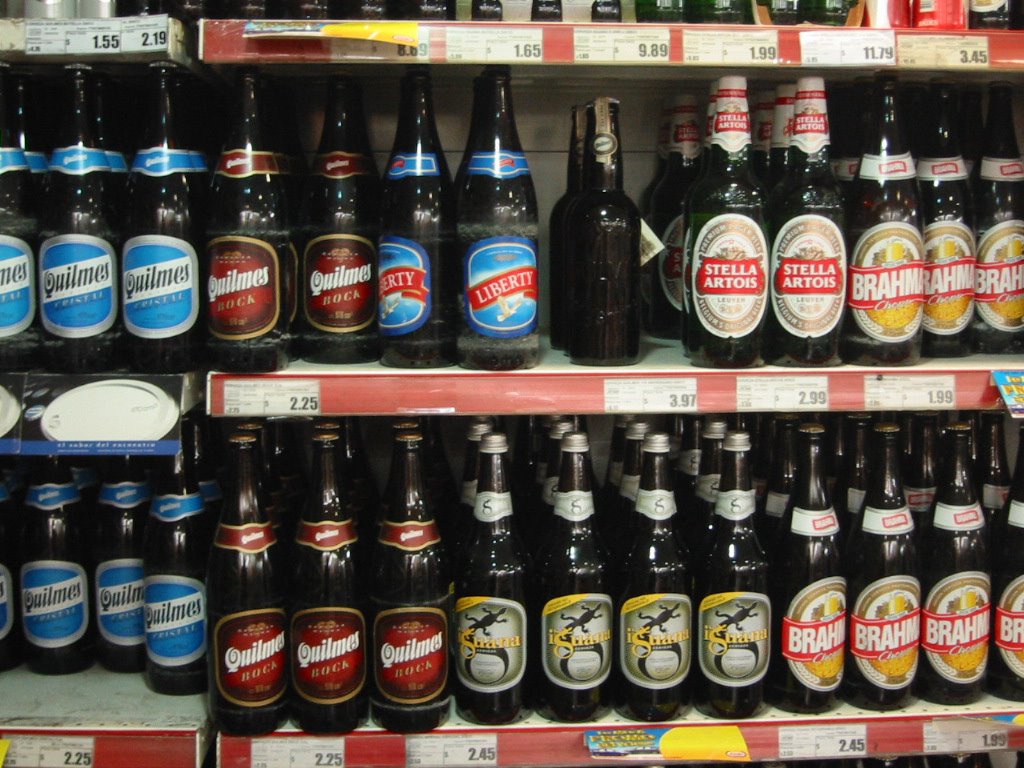
I was in the middle of Argentina, in San Luis, in need for a beer. A serious beer. They don't kid around here. 30cl bottles are a luxury. Beer comes the big bottle 3/4l bottle. And there it was, right in front of me: Stella Artois, the pils beer from Leuven and key brand of InBev.

Inbev, headquartered in Belgium, was created out of Interbrew and Companhia de Bebidas das Américas (AmBev) and is now the world's largest brewer, by volume, selling 202 million hectoliters (hl) of beer and 31.5 million hl of soft drinks in 2004. In the picture of above (which include 85% of the brand in the store. Heineken and Mar del Plata were not in the picture), Iguana, Brahma and Quilmes are also owned by Inbev Argentina. Stella Artois seems to be picking up in Argentina. Many bars carry the beer on tap. You see many billboards, bar umbrellas and advertisements for Stella Artois.

Other key ingredients of daily live in Argentina include:

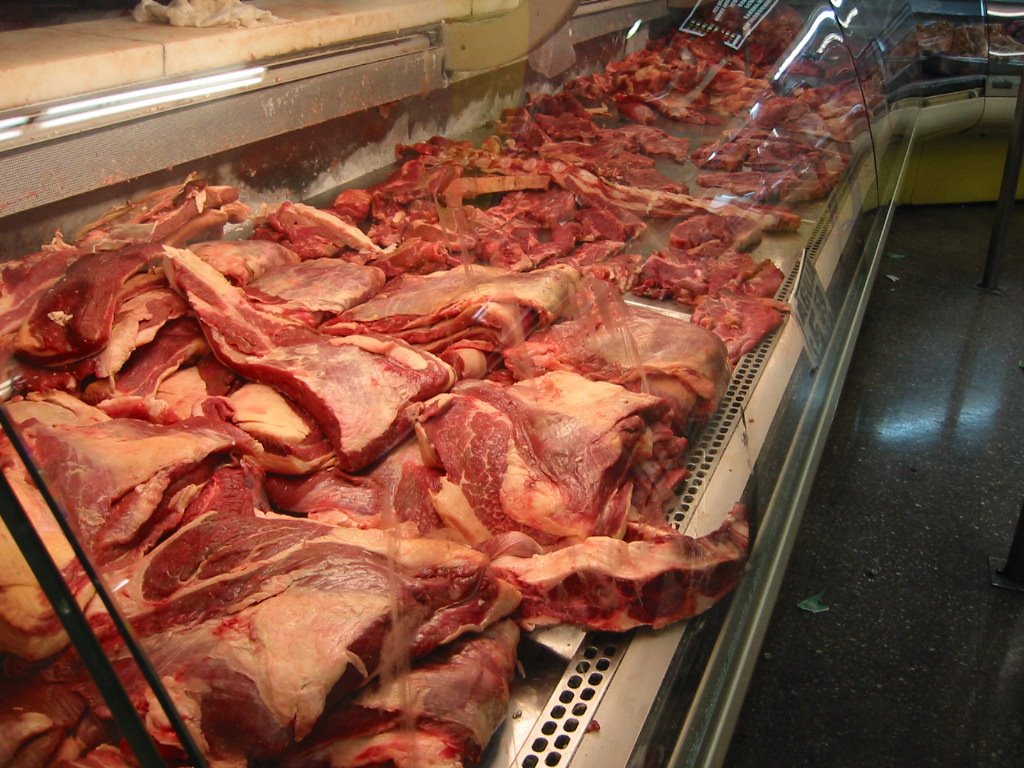
of course carne argentina (meat)
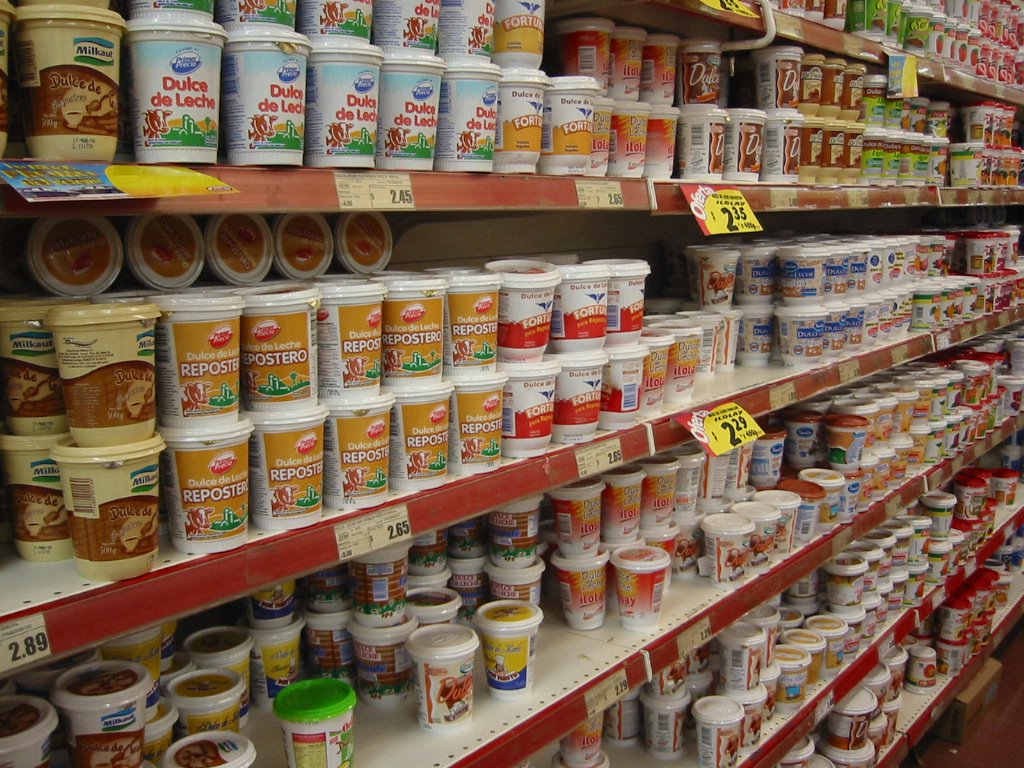
dulce de leche (caramel spread)

yerba for mate

PS: Dear Inbev, Dear tourist office of Argentina, I'll be awaiting my check for promoting your products.

Friday, February 03, 2006

Just put the gas can on top

It struck me, while driving around in Argentina, that many car had a gas can on top of the car. Since labour is cheap in Argentina, I figured, this might be a 'we fill your gas can service while you sit at home'. I wouldn't be surprised: you can order ice cream to be delivered, right in time for desert; or you can even your prescription medication to be delivered. This comes in handy when you are on your sick bed.
Two scoops of chocolate con dulce de leche and a pack of morphine, please. Yes, to be delivered. Can you also add napkins and a siringe? Thanks!
I learned however that a gas can or, in the poorer neighbourhoods, a plastic soda bottle, ment 'for sale'.

How about putting a sign with details of the car, and the price? It won't fall of when you drive around.

(Oh, and if you were curious about a Peugeot 504 taxi. That's the one. Thousands of them roam the streets of Buenos Aires. As if it were the 80s.)

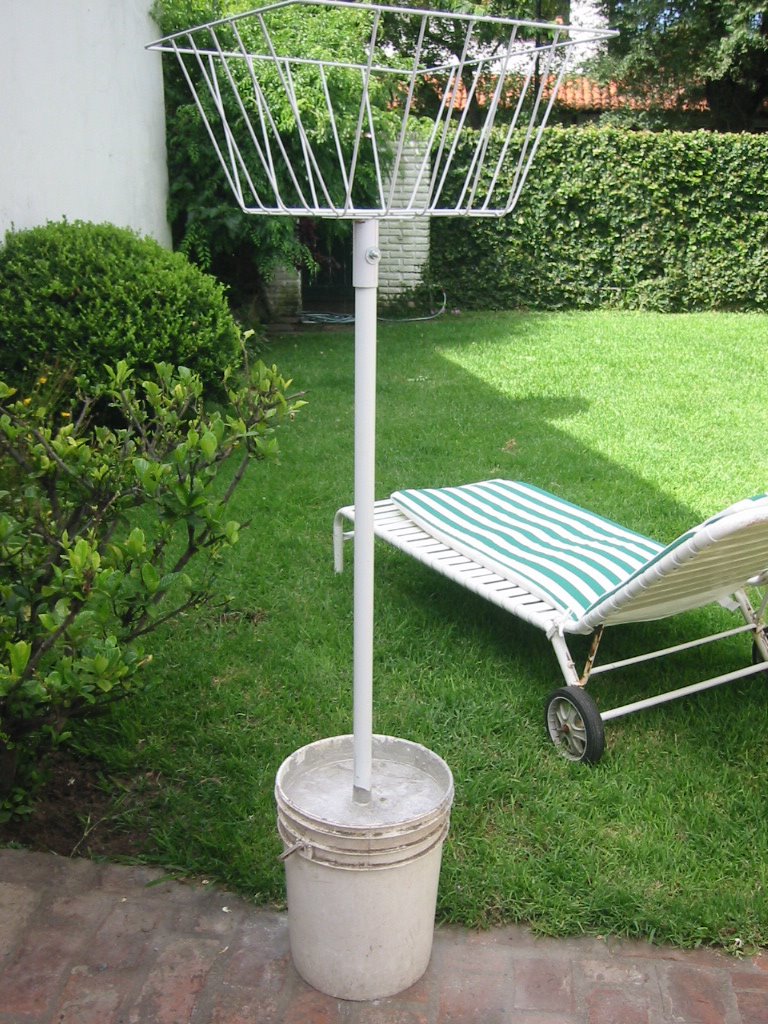
Guess the object

You will find this object in every street in Argentina. It is a little metal basket about 1.5m above the ground.


No, it ain't a cheap version of a basketball ring (in honor of Argentina's hero, Manu Ginobili). Here's a hint: Guess the city - item 5.